Dieses Projekt unterliegt einer Vertraulichkeitsvereinbarung. Einige Details und Abbildungen wurden angepasst. Hier beschreibe ich meine Überlegungen und mein Vorgehen.
Leonteq AG · 2022
Strukturierte Kryptoprodukte
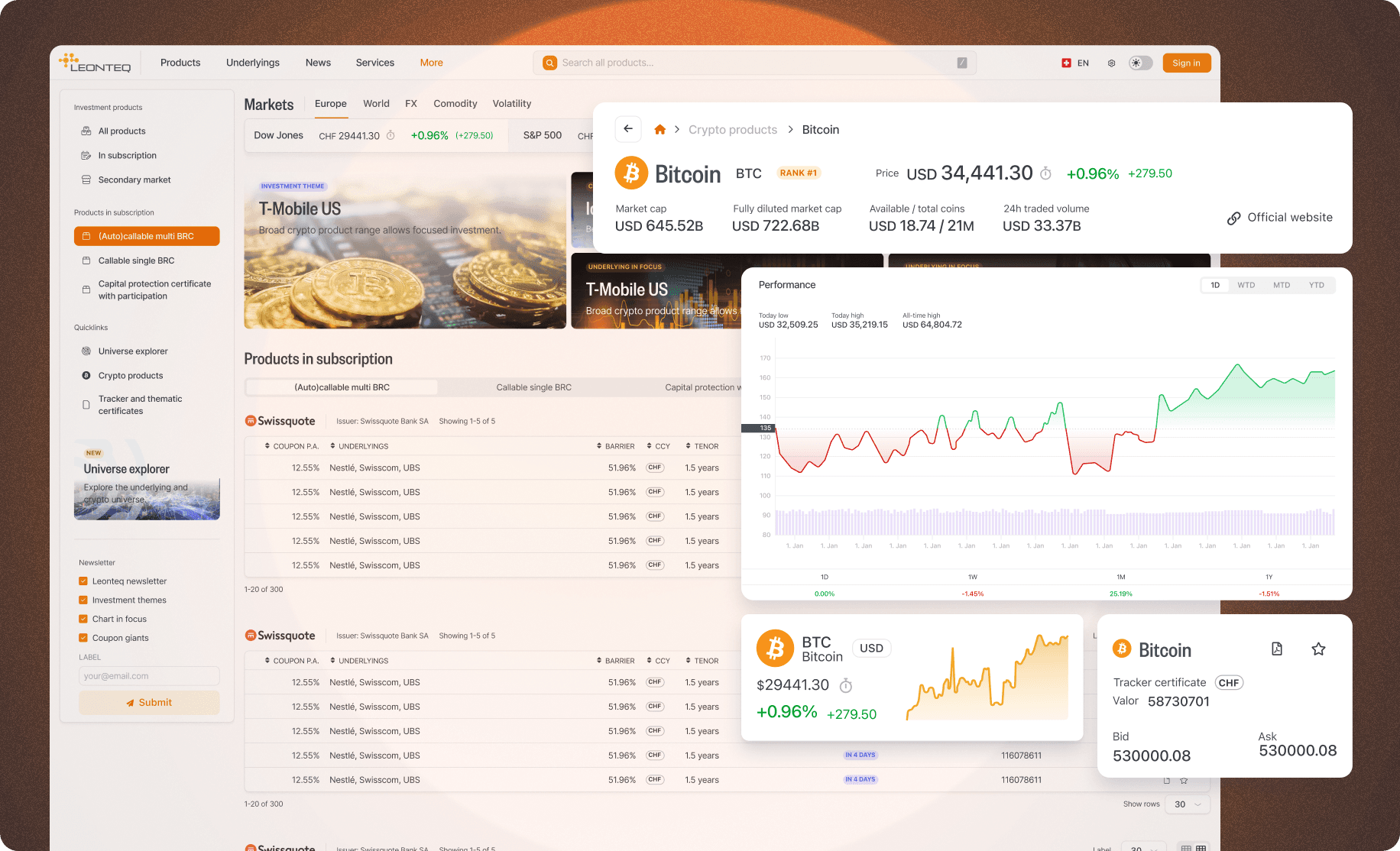
Ich gestaltete die Produktsuche und ein wiederverwendbares Chart-System, damit Kundenberater komplexe Kryptoprodukte verständlich erklären konnten.
Meine Rolle
Lead Product Designer
Team
2 Designer, 6 Entwickler
Zeitraum
5 Monate
Plattform
Webanwendung
Wofür ich verantwortlich war
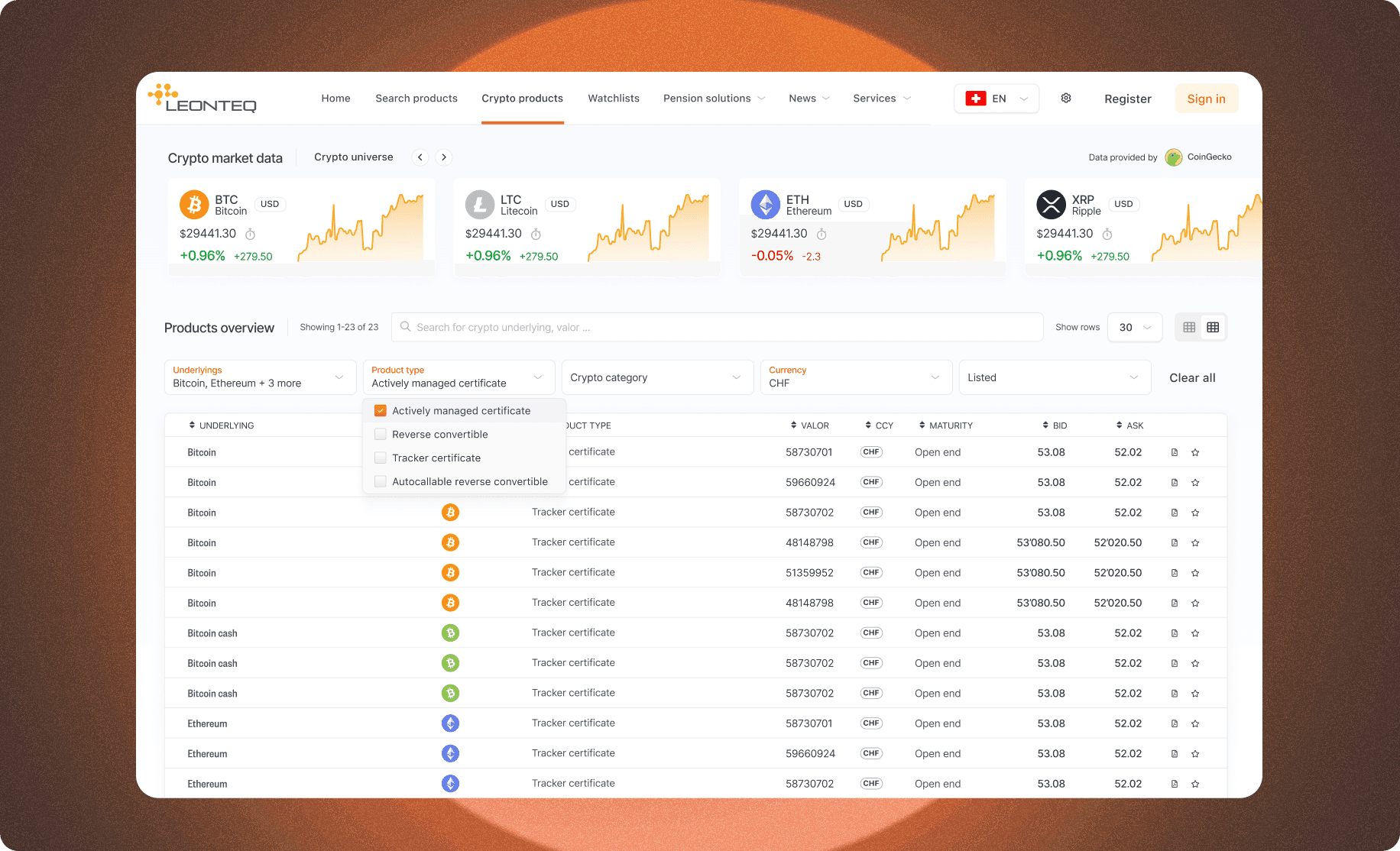
- Ich gestaltete Suche, Filter und Produktdetailseiten.
- Ich definierte drei Informationsebenen: die Übersicht, das Diagramm mit den wichtigsten Konditionen und schliesslich das vollständige Term Sheet.
- Ich gestaltete ein wiederverwendbares Chart-System und legte mit dem Frontend-Team fest, wie produktrelevante Kursniveaus und die zugehörigen Erläuterungen dargestellt werden.
Was ich verständlicher machen musste
Die bestehende Oberfläche stellte komplexe Produkte in umfangreichen Zahlentabellen dar. Ausübungspreise, Barrieren und Beobachtungstermine waren sichtbar, doch ihr Zusammenhang mit der Wertentwicklung des Basiswerts war schwer zu erfassen.
Ich konzentrierte mich auf die Menschen, die diesen Zusammenhang erklären mussten: Kundenberater und ihre institutionellen Kunden. Kundenberater sollten Produkte schneller finden und alle Informationen für ein fundiertes Kundengespräch griffbereit haben.
◢Kernidee“Die Oberfläche sollte dabei helfen, ein Produkt zu erklären, statt nur seine Konditionen anzuzeigen.”
◢ Vorgehen
- 01
Die Entscheidungen hinter den Daten verstehen
Gemeinsam mit Händlern, Kundenberatern und institutionellen Kunden erfasste ich den Weg von der Produktsuche bis zur Auftragserteilung.
- 02
Informationen sinnvoll gliedern
Ich gliederte die Oberfläche in Übersichtskarten, Diagramme mit den wichtigsten Konditionen und das vollständige Term Sheet.
- 03
Ein wiederverwendbares Chart-System gestalten
Ich erarbeitete die Darstellung der einzelnen Produktstrukturen, einschliesslich Ausübungspreisen, Barrieren und Beobachtungsterminen.
- 04
Den Prototyp mit Nutzern prüfen
Sechs Kundenberater und vier institutionelle Kunden prüften den Prototyp. Mit ihrem Feedback passte ich den Detailgrad auf jeder Ebene an.
- 05
Die Funktionen schrittweise veröffentlichen
Das Team veröffentlichte zuerst Suche und Übersichtskarten, danach Detailseiten und schliesslich Merkliste und Vergleich.
Die Entscheidung hinter der Oberfläche
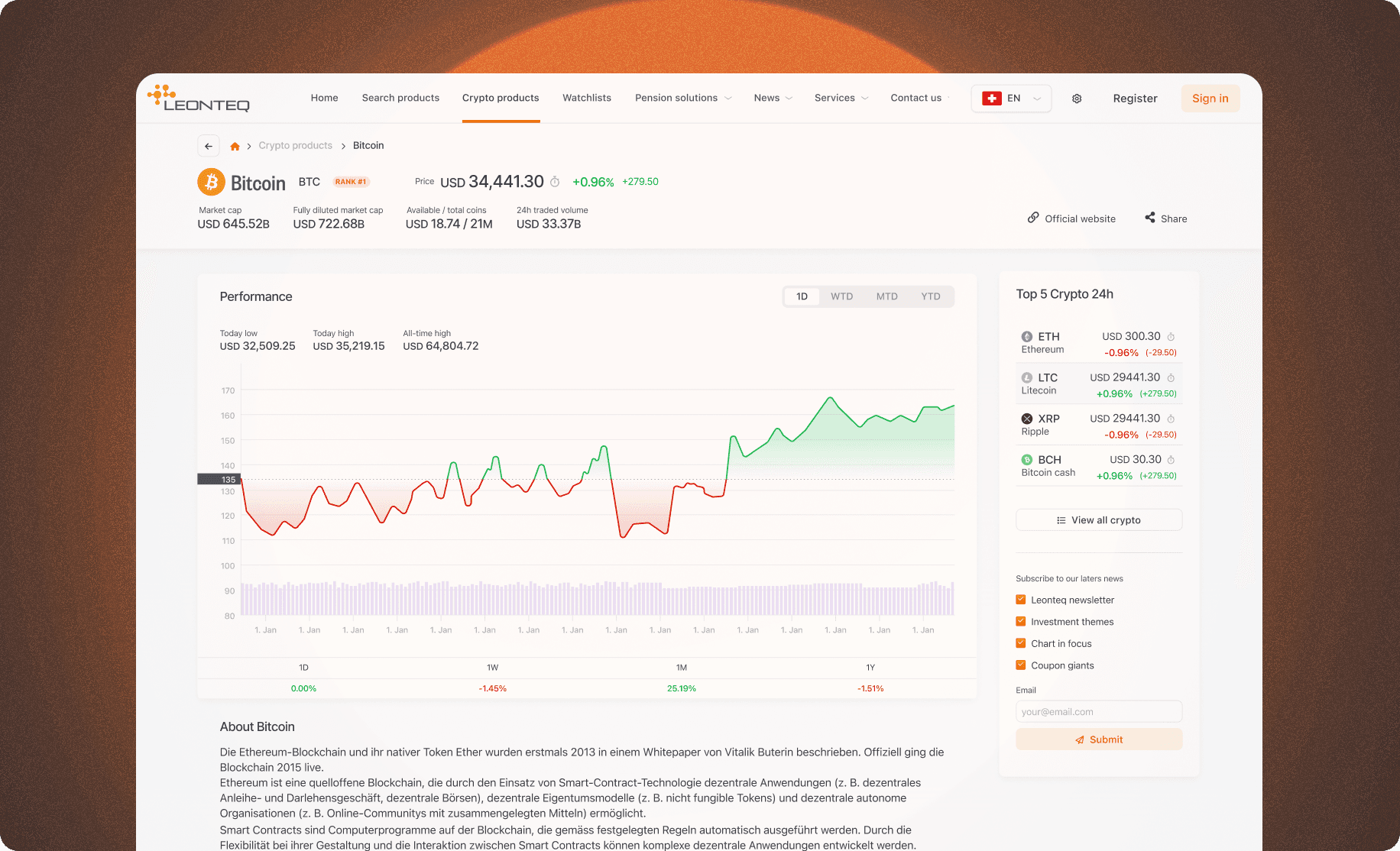
Ich stellte den Kurschart des Basiswerts in den Mittelpunkt der Detailseite. Der Kursverlauf des Basiswerts sollte gemeinsam mit den für das Produkt relevanten Ausübungspreisen, Barrieren und Beobachtungsniveaus sichtbar sein.
Ich gestaltete ein wiederverwendbares Chart-System, statt für jedes Instrument eine eigene Visualisierung zu entwerfen. Mit dem Frontend-Team legte ich fest, wie die Komponente die Produktkonditionen verarbeitet und daraus die relevanten Kursniveaus, Erläuterungen und Risikoindikatoren darstellt.
Ausserdem definierte ich eine dreistufige Informationsstruktur. Die Übersicht half bei der Produktsuche. Der Chart und die wichtigsten Konditionen machten das Produkt verständlich. Das vollständige Term Sheet blieb für eine vertiefte Prüfung zugänglich.
Was sich verändert hat
Die folgenden Ergebnisse wurden für das gemeinsame Projekt berichtet.
- 40%
- schnellere Produktsuche, gemessen an der durchschnittlichen Zeit von der Suche bis zur Auswahl
- 60%
- weniger Supportanfragen zur Produktstruktur
- 3x
- höhere durchschnittliche Interaktion mit Produktdetailseiten
- 89%
- der Pilotnutzer bevorzugten die neue Oberfläche im A/B-Test
Was ich aus diesem Projekt mitnehme
Dieses Projekt hat meinen Blick auf Informationsdesign geschärft. Ein Diagramm ist dann sinnvoll, wenn es eine Frage beantwortet, die sich aus einer Tabelle nur schwer beantworten lässt.
Ich habe ausserdem gelernt, für wechselnde Bedingungen zu gestalten. Zahlen konnten sich schnell verändern, doch Hierarchie, Beschriftungen und Interaktion mussten verlässlich bleiben. Diese Art von Klarheit suche ich in jedem komplexen Produkt.