Dieses Projekt unterliegt einer Vertraulichkeitsvereinbarung. Einige Details und Abbildungen wurden angepasst. Hier beschreibe ich meine Überlegungen und mein Vorgehen.
Leonteq AG · 2021
Lynqs AMC Management
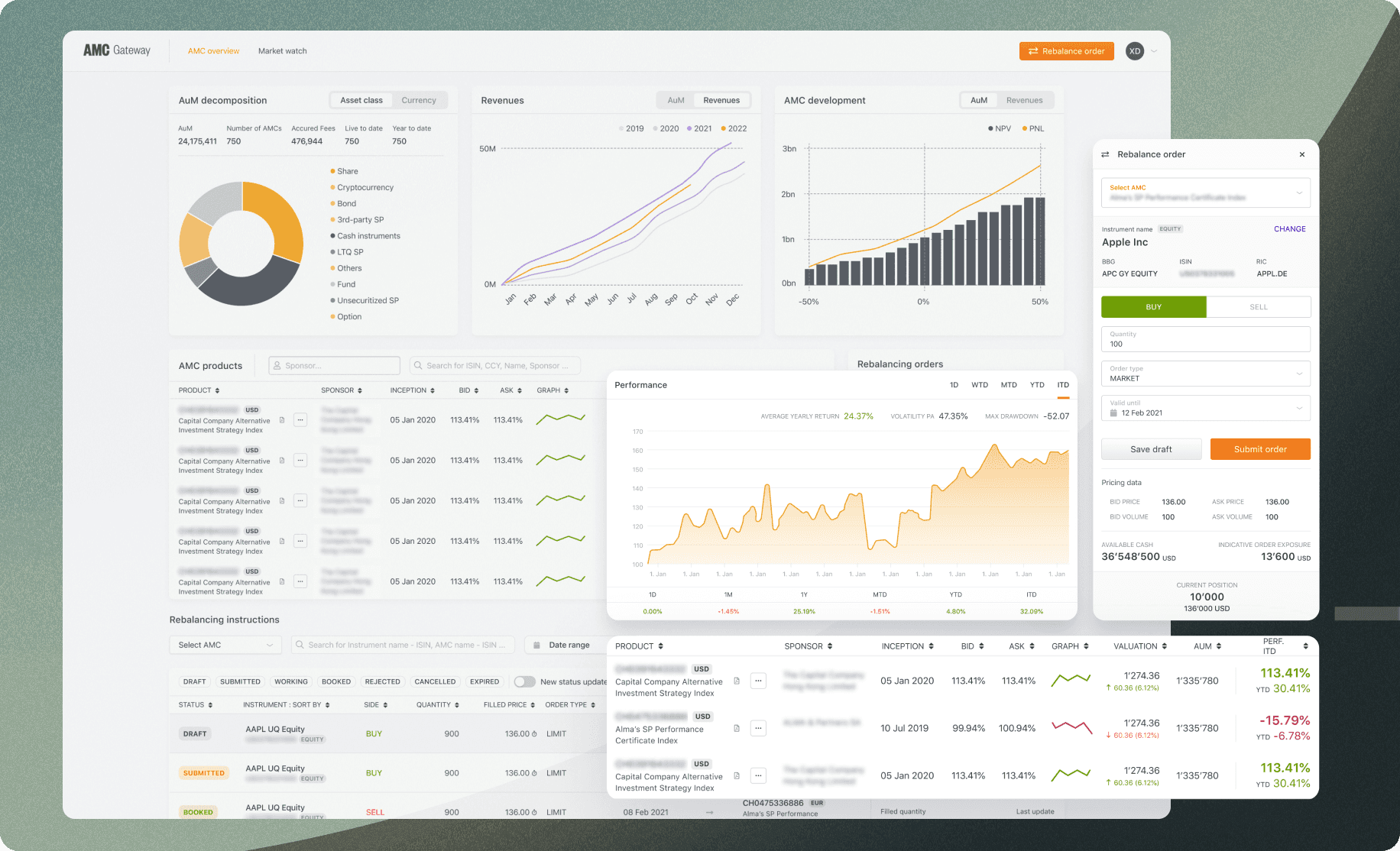
Ich verantwortete das gesamte UX- und UI-Design für die Verwaltung aktiv gemanagter Zertifikate und arbeitete eng mit Portfoliomanagern und acht Entwicklern zusammen.
Meine Rolle
Product Designer
Team
Einziger Designer · 8 Entwickler
Zeitraum
10 Monate
Plattform
Webanwendung
Wofür ich verantwortlich war
- Als einziger Product Designer verantwortete ich Ansichten, Abläufe und Interaktionszustände.
- Ich arbeitete mich vier Wochen in das Fachgebiet ein, bevor ich die Oberfläche gestaltete.
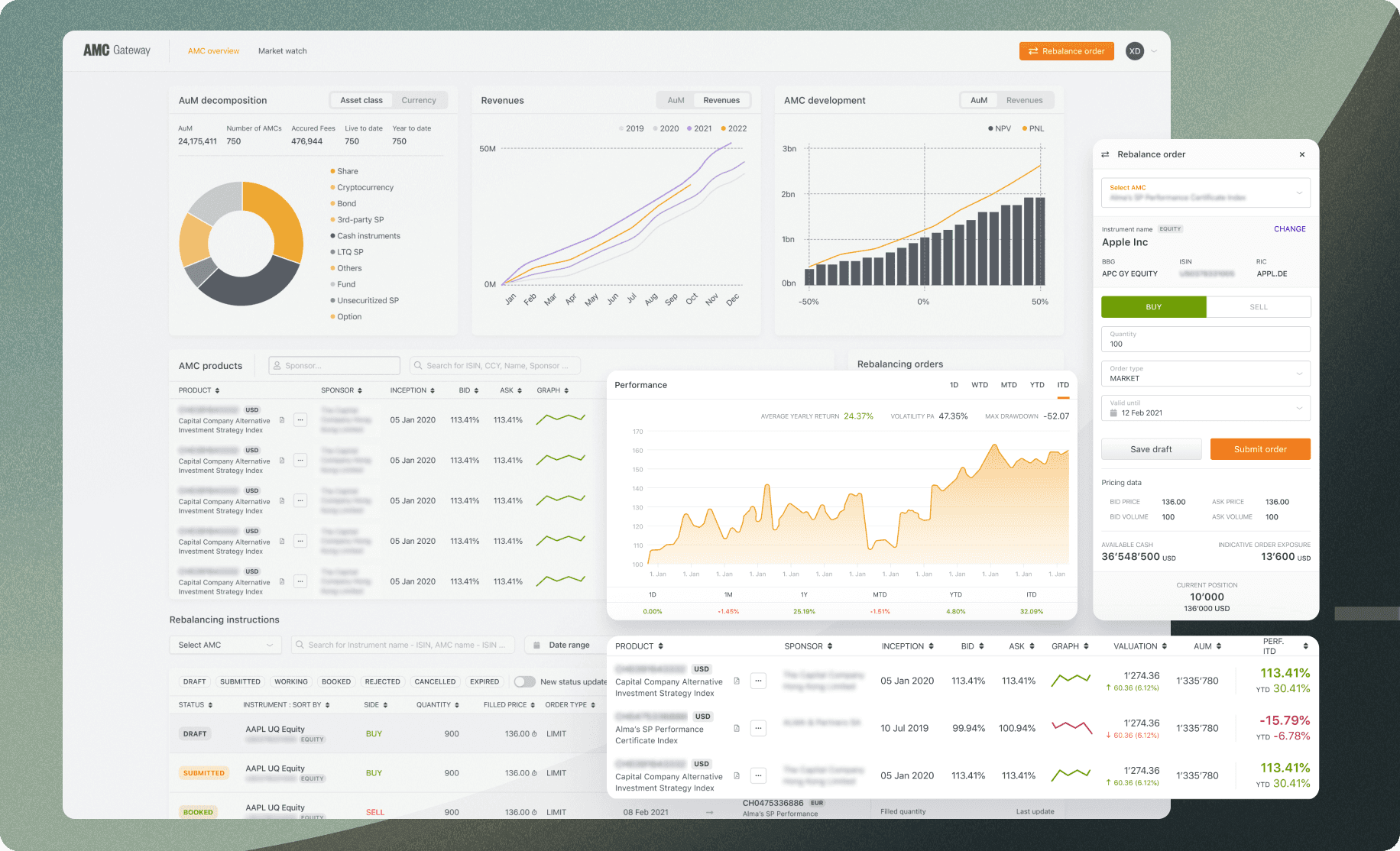
- Ich entwarf den Rebalancing-Prozess mit sichtbarer Risikoexposition, Bestätigungsschritten und nachvollziehbarem Änderungsprotokoll.
- Ich hielt wichtige Daten sichtbar und überprüfte diese Entscheidung mit erfahrenen Nutzern.
Warum ich zuerst das Fachgebiet kennenlernte
Mit einem aktiv gemanagten Zertifikat kann ein Portfoliomanager einen Korb von Vermögenswerten verändern, ohne ein neues Produkt aufzulegen. Dafür muss er Zusammensetzung, Wertentwicklung, Vorgaben und frühere Änderungen im Zusammenhang verstehen.
Ich war der einzige Designer des Produkts. Bevor ich Figma öffnete, verbrachte ich vier Wochen mit den Produkt- und Operations-Teams, um die Instrumente und den Rebalancing-Prozess kennenzulernen. Die bestehende Mischung aus Tabellen und getrennten Ansichten machte dieses Wissen besonders wichtig.
Ich musste zuerst die Entscheidungen der Nutzer verstehen, bevor ich bestimmen konnte, was die Oberfläche ihnen zeigen sollte.
◢ Vorgehen
- 01
Das Fachgebiet kennenlernen
Vier Wochen lang arbeitete ich mit den Produkt- und Operations-Teams, um Instrumente, Vorgaben und den Rebalancing-Prozess zu verstehen.
- 02
Den Arbeitsablauf verstehen
Mit Portfoliomanagern in der Schweiz und im Vereinigten Königreich untersuchte ich den Weg von einer Entscheidung bis zu ihrer Bestätigung.
- 03
Das Cockpit strukturieren
Gemeinsam mit der Entwicklung legte ich fest, welche Informationen in die Hauptansicht gehören, welche eine eigene Detailansicht benötigen und welche Aktionen bestätigt werden müssen.
- 04
Den Entwurf testen
Ich entwickelte Wireframes und detaillierte Prototypen und verfeinerte sie in drei Runden mit Portfoliomanagern anhand realer Portfoliodaten.
- 05
Die Umsetzung begleiten
Über vier Sprints hinweg gestaltete ich parallel zur Entwicklung und verbesserte die Bedienung in zwei weiteren Runden nach dem Start.
◢Kernidee“Die relevanten Daten sollten gemeinsam sichtbar bleiben. Für erfahrene Nutzer war eine klare Struktur wichtiger als eine möglichst reduzierte Ansicht.”
Warum ich die Informationen sichtbar liess
Ich wollte die vielen Informationen klar strukturieren, ohne wichtige Details auszublenden. Portfoliomanager mussten zusammengehörige Informationen gemeinsam sehen können. Sie auf getrennte Ansichten zu verteilen, hätte ihre Arbeit erschwert.
Ich strukturierte das Cockpit entlang ihrer Entscheidungen: Portfolio prüfen, eine Änderung erkennen, neu gewichten, bestätigen und das Protokoll prüfen. Den Rebalancing-Prozess gestaltete ich so, dass die Risikoexposition bei jedem Schritt sichtbar blieb und wichtige Punkte ausdrücklich bestätigt werden mussten.
Gemeinsam mit der Entwicklung erarbeitete ich die Datenhierarchie und verfeinerte die Prototypen mit den Portfoliomanagern. Es sollte klar sein, was als Nächstes zu tun ist, ohne dabei wichtige Zusammenhänge aus dem Blick zu verlieren.
Was sich verändert hat
Die folgenden Ergebnisse wurden für das gemeinsame Projekt berichtet.
- 65%
- weniger Zeit für einen vollständigen Rebalancing-Prozess
- 0
- Rebalancing-Fehler nach dem Start, gegenüber zuvor 3–4 pro Monat
- 12
- Portfoliomanager in 3 Ländern innerhalb von 6 Wochen eingearbeitet
Was ich aus diesem Projekt mitnehme
Es hat sich gelohnt, mich zuerst gründlich in das Fachgebiet einzuarbeiten. Ich konnte mit Entwicklern über Sonderfälle sprechen und den Portfoliomanagern präzisere Fragen stellen.
Wer täglich mit dem Produkt arbeitet, braucht die relevanten Details direkt im Blick. Meine Aufgabe war es, diese Menschen bei ihren Entscheidungen zu unterstützen. Manchmal bedeutete das, bewusst mehr Informationen auf dem Bildschirm zu zeigen.