Digital Products Bureau · 2026
Digital Products Bureau
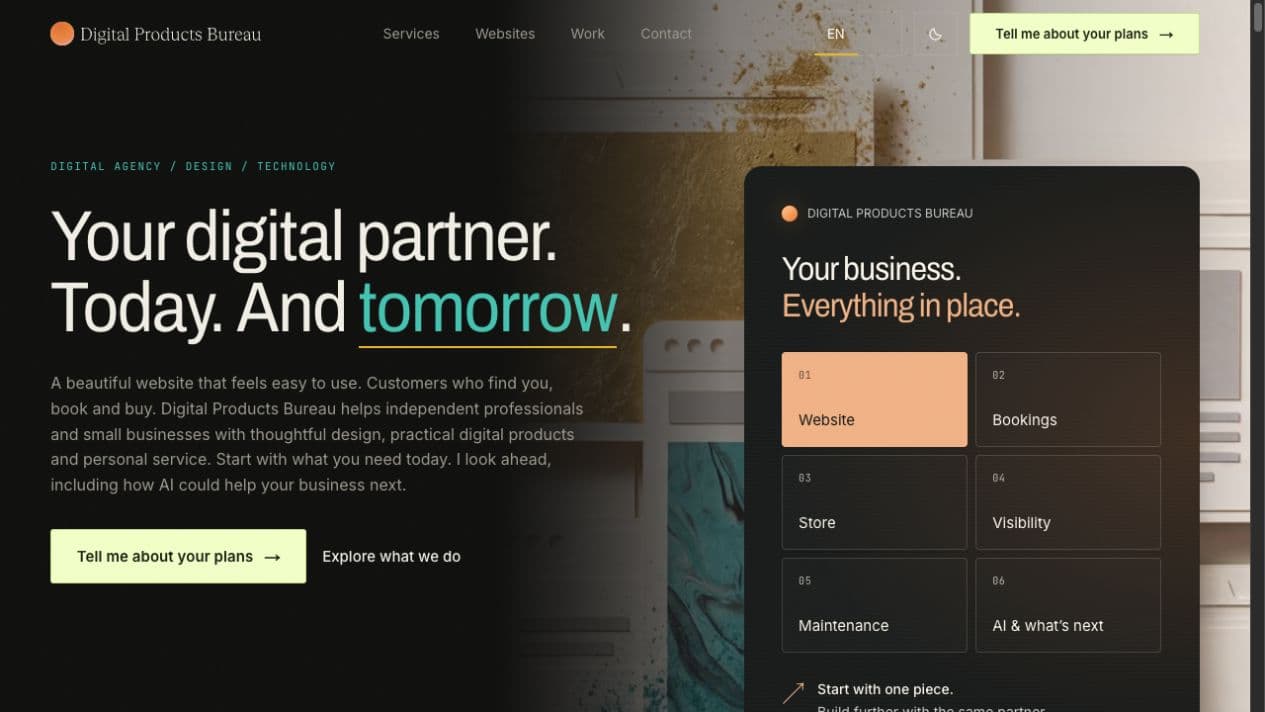
Ich habe das Angebot, den Markenauftritt und die Websites selbst entwickelt. Mein Ansatz: mit dem beginnen, was ein Unternehmen heute braucht, und die Zusammenarbeit langfristig weiterführen.
Meine Rolle
Gründer, Designer & Entwickler
Team
Eigenständiges Digitalbüro
Zeitraum
Laufend
Plattform
Internationale und belgische Websites
Wofür ich verantwortlich war
- Ich definierte die Positionierung und stellte das Angebot zusammen: Webdesign, bessere Auffindbarkeit im Netz, Buchungslösungen, Onlineshops und laufende Betreuung.
- Ich gestaltete und entwickelte den Markenauftritt, die Seitenstruktur und die Oberflächen der internationalen und belgischen Websites.
- Ich schrieb die Leistungsbeschreibungen und gestaltete den Weg von der ersten Information bis zur Anfrage. Besucher sollten verstehen, was sie erhalten, welche Möglichkeiten sie haben und wie sie mich erreichen.
- Ich entwickle das Angebot laufend weiter. Dazu gehört auch, Unternehmen auf den Einsatz von KI vorzubereiten und passende Lösungen mit ihnen umzusetzen.
Produktdesign für kleinere Unternehmen
Mit Digital Products Bureau unterstütze ich Selbstständige und kleine Unternehmen bei ihrem digitalen Auftritt. Ich gestalte Websites, auf denen Kunden schnell verstehen, was ein Unternehmen anbietet, und einfach buchen, einkaufen oder Kontakt aufnehmen können.
Ich habe das Büro auf eine langfristige Zusammenarbeit ausgerichtet. Ein Unternehmen kann mit einer Website starten, seine Auffindbarkeit verbessern, Buchungen oder einen Shop ergänzen und sich für die nächste Änderung wieder an dieselbe Person wenden. Ich gestalte sowohl das Angebot als auch die Websites und Anwendungen: von der verständlichen Leistungsbeschreibung bis zur technischen Umsetzung.
◢Kernidee“Mit dem beginnen, was das Unternehmen heute braucht. Mit einem Partner weiterbauen, der es kennt.”
Ein breites Angebot verständlich machen
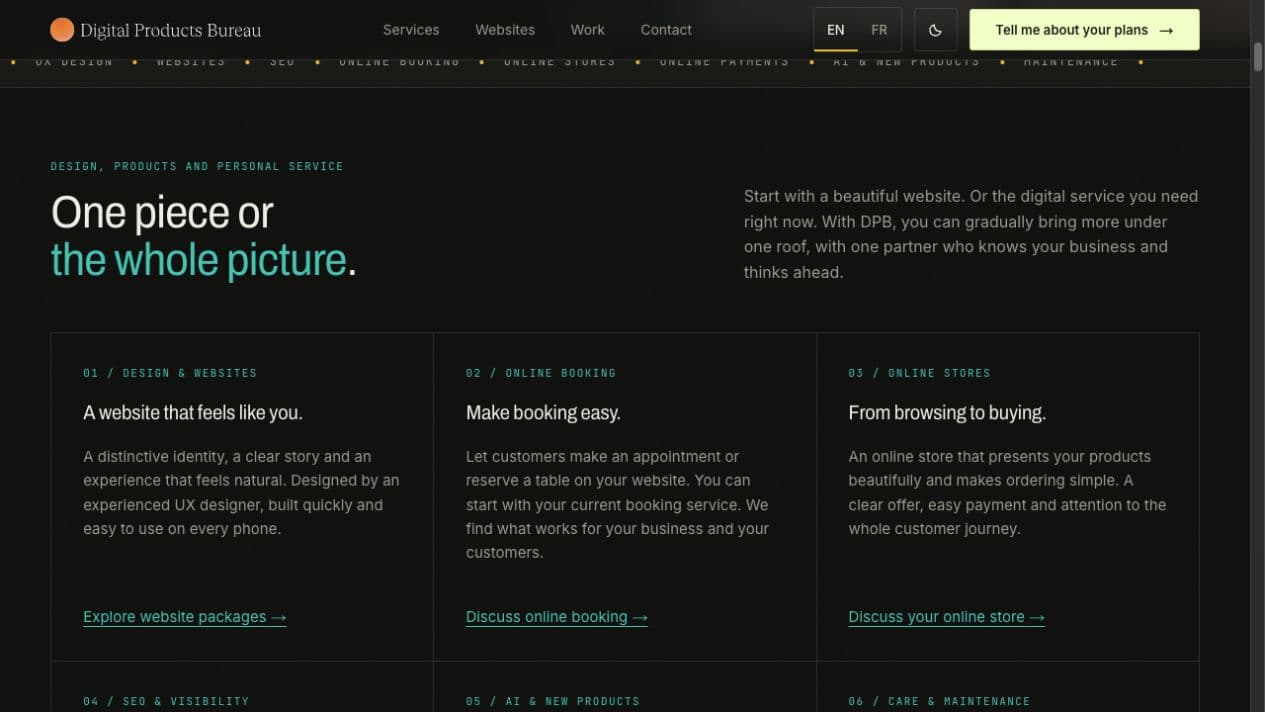
Ich habe das Angebot in sechs Bereiche gegliedert: Websites, Onlinebuchungen, Onlineshops, Auffindbarkeit im Netz, laufende Betreuung und Unterstützung beim Einsatz von KI. Zu jedem Bereich erkläre ich den Nutzen und zeige, wie die Zusammenarbeit beginnen kann.
Die Website-Pakete zeigen schon vor der ersten Anfrage, welche Leistungen enthalten sind und welche laufenden Kosten entstehen. Für individuelle Vorhaben erstelle ich ein passendes Angebot. Diese Struktur soll den Einstieg erleichtern, ohne so zu tun, als bräuchte jedes Unternehmen dieselbe Lösung.
◢ Vorgehen
- 01
Das Unternehmen kennenlernen
Im ersten Gespräch geht es darum, was das Unternehmen anbietet, was seine Kunden brauchen und was bereits gut funktioniert.
- 02
Die Aufgaben der Kunden verstehen
Ich verbinde jede Leistung mit einer konkreten Kundenaufgabe: Informationen finden, buchen, kaufen oder Kontakt aufnehmen.
- 03
Die Website gestalten und umsetzen
Ich verbinde Informationsarchitektur, visuelle Gestaltung und Entwicklung. Den Entwurf der Startseite bespreche ich mit dem Kunden, bevor ich die gesamte Website umsetze.
- 04
Nach Bedarf erweitern
Laufende Betreuung und spätere Ergänzungen bleiben optional. So wählt jedes Unternehmen die Unterstützung, die es braucht.
Auf dem aufbauen, was bereits funktioniert
Meine Kunden können bestehende Lösungen weiter nutzen. Wenn ein Unternehmen bereits mit einem Buchungsdienst wie Zenchef arbeitet, binde ich ihn in die neue Website ein. Es muss weder alle Systeme wechseln noch sämtliche Leistungen auf einmal buchen.
So führt die Website Besucher zu den passenden Angeboten und verbindet sie mit den bestehenden Buchungs- oder Bestellsystemen. Weitere Produkte oder Integrationen besprechen wir, wenn es einen konkreten Grund dafür gibt.
Ein gemeinsames Angebot für unterschiedliche Märkte
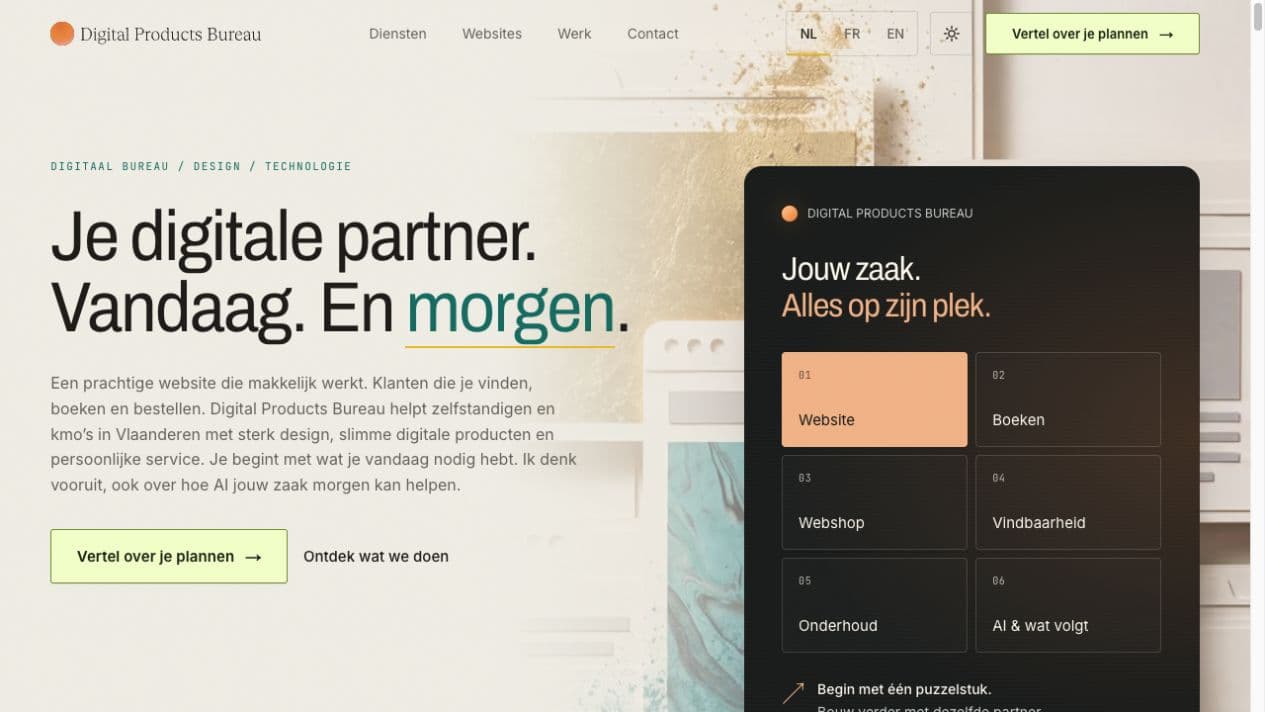
Beide Websites beruhen auf demselben Leistungsangebot und Markenauftritt. Die internationale Website stellt das Büro auf Englisch und Französisch vor. Die belgische Website richtet sich auf Niederländisch an Unternehmen in Flandern, mit passenden Beispielen, Formulierungen und Zahlungsoptionen.
So bleibt der Auftritt einheitlich, während die Inhalte auf den jeweiligen Markt abgestimmt sind.
Auf die nächsten Schritte vorbereiten
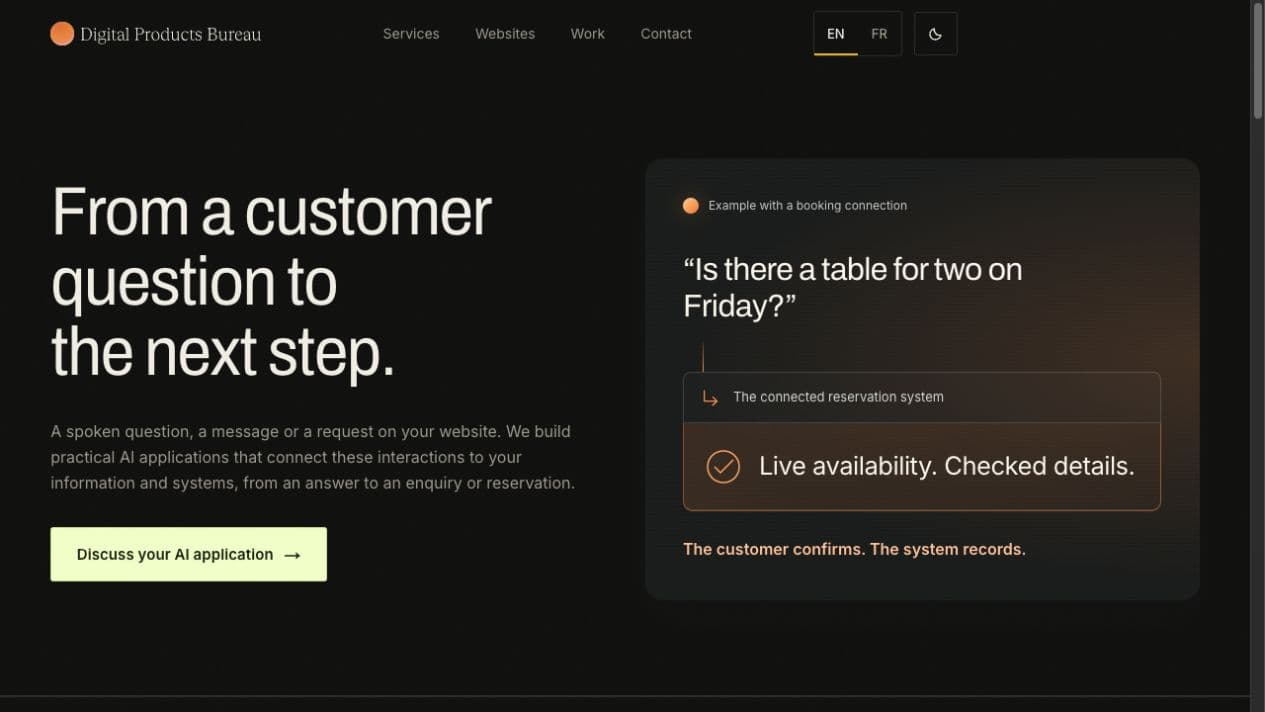
Ich beschäftige mich auch damit, wie kleine Unternehmen KI sinnvoll einsetzen können. Dafür helfe ich ihnen, ihre Unternehmensinformationen aufzubereiten, ihre Auffindbarkeit zu prüfen und geeignete Anwendungen und Assistenten zu erkunden. Die Grundlage bleibt eine gut gestaltete, einfach bedienbare Website mit klaren Informationen.
Dabei betrachte ich den gesamten Ablauf: von der Anfrage bis zur bestätigten Buchung oder Bestellung. Ein Assistent braucht dafür eine geeignete technische Anbindung, die nötigen Zugriffsrechte und aktuelle Angaben zur Verfügbarkeit. Auch der Bestätigungsschritt muss klar geregelt sein. Diese Möglichkeiten prüfe ich parallel zu den Leistungen, die ich heute bereits anbiete.
Was ich aufgebaut habe und weiterentwickle
Die internationale und die belgische Website sind online. Dort finden Interessierte die Leistungen, Website-Pakete, Informationen zur laufenden Betreuung und den direkten Kontakt zu mir. Die Designkonzepte auf der DPB-Website sind als Vorschläge gekennzeichnet und von umgesetzten Kundenprojekten getrennt.
Für mich verbindet diese Arbeit Service Design, unternehmerische Entscheidungen und Umsetzung. Ich entwickle das Angebot, schreibe die Inhalte und übernehme Gestaltung und technische Umsetzung. Bei der Weiterentwicklung kehre ich immer wieder zu derselben Frage zurück: Was würde diesem Unternehmen den nächsten digitalen Schritt erleichtern?